Tuesday, October 31, 2017

Reading Notes: Southwestern and California Legends, Part A

I didn't really know what I wanted to read this week so I asked the Crystal Ball and that's what I read. These stories were very short and really cute. A lot of the stories were creation stories and it was really interesting how many different versions there were for the creation of one thing. 


Creation and Longevity

This was my favorite of the three coyote creation stories! I liked how all the animals worked together to create the earth and I loved that Coyote carried the fire from the west back to the Indians in his ears. I could just picture it and it was so cute! If I were to rewrite this story, I would probably tell it as a bedtime story. That way the kids can learn to work together and think Coyote bringing fire back in his ears is cute too.

(Photo from Deviant Art)

The Creation of the World

I enjoyed how this story described how a lot of the basic things came to be like the earth, the sun, and the stars. I liked how they all had a different component to them and I would like to use that if I rewrite this story. I would probably have a planet making factory and as you follow the assembly down, you would learn about how the basic planet was made and then you add water and mountains, and then the sun, and so on. There would also be a room for trying to build new planets, like how the Earth Doctor tried a few different ways to get the earth to stay steady.

The Origin of Light

I thought it was so funny that the animals used to just bump into each other before there was light. In a retelling of this story I would write about Hawk and Coyote planning on how to create the sun and then having to regroup when they realize they also have to make the moon.

Bibliography. Myths and Legends of California and the Old Southwest by Katharine Berry Judson (1912). Link to readings


Thursday, October 26, 2017

Week 10 Story: How The Cactus Got Its Color


Long ago, the flowers on the cactus were white but they so desperately wanted to have color. The rainbow had given other plants and flowers color, but it never came near the cactus plants.

“Hey, Rainbow! Next time would you please set one of your ends near us so that we can get some color?” A cactus plant called up to the rainbow one day after a rainstorm which was the only time that the rainbow appeared.

“No! Your thorns are too sharp! I will never set one of my ends near you and you will never get color!” The rainbow yelled back at the cactus plant.

This made the cactus plants very sad and caused their flowers to close up and droop. They understood because they didn’t want to hurt anyone, but they also wanted to be included. They spent their days watching as all the other plants got color from the rainbow and prayed to the spirits that one day they could get color too. The spirits must have been listening because one day around sunset, a lost cloud drifted over the cactus plants.

The cloud had been chasing its tail all day like a puppy causing it to get separated from the other clouds. It needed to find the mountain soon because after the sun set it would be time for the cloud to go to sleep. Clouds sleep at the peaks of mountains because they grow tired and heavy while waiting for the rains to come. The little white cloud began to cry and he rained down on the cactus plants. This caused the cactus plants to grow very excited because rain meant that the rainbow would come back and maybe give their flowers color. Instead, the lost cloud became tired and started to sink down into the cactus plants.

The cactus plant who had called up to the rainbow now called out to the cloud, “Hey, little cloud! Watch out! We don’t want our spikes to hurt you!”

The cloud looked over at the cactus plant who had spoken to him, but it was too late because he was already touching some of the taller cactus plants spikes. The cloud began to giggle and cried out, “These spikes tickle!”

This made the cactus plants laugh with happiness. The cactus flowers, never wanting to be left out, opened back up to see what was going on. As soon as the flowers touching the cloud opened up, they began to drink in the red, orange, and yellow colored mist left on the cloud from the sunset. The cloud noticed this and began to scoot between the cactus plants, so that all the flowers could get some color. The entire time the cloud giggled as the spikes continued to tickle him.

When the sun rose in the morning, all the cactus flowers had color. The mountain was now visible again, so the cloud said his goodbyes and floated off to be with his cloud friends.

The End.  
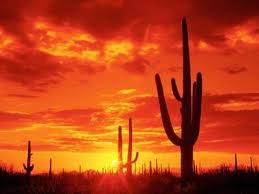
(Photo from Pinterest)

Author’s Note: This is based off two stories from the Tejas Legends Unit, When The Rainbow Was Torn and The Cloud That Was Lost. In the story When The Rainbow Was Torn, the rainbow has given all the other flowers color except for the white cactus flower because of it’s sharp thorns. One day the rainbow accidently starts placing one of its ends on field of cactus plants. Only the red, orange, and yellow colors get stuck on the spines while green, blue, indigo, and violet slip away. The white cactus flowers open and pulls some of the vapor from the three colors before the rainbow can get unstuck. Therefore, the cactus flowers are those three colors. In the story The Cloud That Was Lost, a cloud gets distracted playing and can’t find his way back to the mountain to sleep with the other clouds, so he decides to sleep in a field. The field is covered in white flowers who also want color. The cloud is still pink and purple from the sunset, so the flowers pull the vapor from him until he is all gone. This is why wild phlox are the colors they are. In my reading notes I talked about how I felt bad for the cloud basically getting punished for getting lost and how the rainbow couldn’t get away from the cactus fast enough when it got stuck. I wanted to change these two aspects and I felt it was best to combine the two stories.

Bibliography. The Cloud That Was Lost retold by Florence Stratton and illustrated by Berniece Burrough (1936). Links to reading
Bibliography. When The Rainbow Was Torn retold by Florence Stratton and illustrated by Berniece Burrough (1936). Links to reading

Wednesday, October 25, 2017

Reading Notes: Tejas Legends, Part B

I really enjoyed these legends. They were all pretty much origin stories but those are some of my favorite stories because by the end they answer all the questions they asked in the beginning. These stories are great for children and are a pretty easy reads.


Why Hummingbirds Drink Only Dew

The image of a hummingbird and a heron owning a lake was just too cute! I kept thinking about them wearing flannel shirts and having a cabin by the lake and renting canoes to the other birds! I don't know how I would turn this into a story but I'd figure something out. Maybe I'll write about how they came to own the lake.

When The Rainbow Was Torn

I felt so bad for the cactus in this story. Why didn't the rainbow want to give some color to the cactus? I mean I could understand not wanting to get caught on the thorns but then when the rainbow was stuck it made it seem like the flowers opening to get color was a bad thing! The flowers just wanted to be pretty too! In a retelling of this story I would probably just expand on the story already told and give the cactus and rainbow some personality. 

(Photo from Wikimedia Commons)

Bibliography. When the Storm God Rides: Tejas and Other Indian Legends retold by Florence Stratton and illustrated by Berniece Burrough (1936). Links to readings


Tuesday, October 24, 2017

Reading Notes: Tejas Legends, Part A

I originally read about the Tejas Legends during the Reading Options assignment back in Week 2. When I saw that we were doing Native American stories this week, I knew instantly that I was going to be reading these. Almost all of these stories were origin stories, so the first ideas that come to mind for a retelling is to do some kind of continuation. This would be the third week in a row of continuation stories for me, so hopefully I can come up with something more creative.


A Tribe That Left Its Shoes

This story was interesting because it had a kind of open ending. The story told how the moccasin flower came to be and why the part of the moccasin for the toes is pointing south. It gave the chief great relief because the toe was pointing to where his tribes old island used to be and now his grandchildren would be able to find it when the old tribe was no longer there to help them. I could do some kind of continuation story where the grandchildren follow the flowers to find their old island, but as mentioned before I'm kind of trying to avoid the continuation story this week. Maybe I could have a story about a cheeky flower that likes to point north or something cute like that.

The Cloud That Was Lost

This story was just too cute! I was loving it the entire time and felt so bad for the cloud that got lost. This story was about how the wild phlox got their pretty colors, but the cloud was pretty much the main character and he was my favorite. In a retelling of this story I would change the ending and have the cloud still be there in the end and maybe come back every night so that the other flowers could take some of his color. What ever I decide to do, the cloud will still be there in the morning!

The Swift Blue One

I thought this story was cool because of intro mentioning Mesteño, a blue horse sculpture that is here at OU. I've seen the sculpture before and there isn't a description to go along with it so it's kind of scary. I enjoyed learning about the horse that the piece was based on and I think It would make an interesting retelling. Maybe the sculpture could come alive and only certain students can tame it or something like that.

(Mesteño (Mustang) by Luis Jiménez. Photo from FJJMA Blog)

Bibliography. When the Storm God Rides: Tejas and Other Indian Legends retold by Florence Stratton and illustrated by Berniece Burrough (1936). Links to readings

Thursday, October 19, 2017

Week 9 Story: Vanida and the Spirit-Guarded Cave

“Long ago, the people of the far north were constantly being attacked so they decided to pack up all their household possessions, cattle, rice, money, and jewels and escape to the south country. They knew that they would become slaves but thought that was better than living in fear. They journeyed through jungles and mountains, eating all their rice and cattle along the way, causing them to eventually have to stop and buy food in a town along the way. The people in the town saw all of their money and jewels and looked at them with greedy eyes. The travelers began to grow nervous that they would be slain for their worldly goods.
 
One man, wiser than the rest of the group, said, “Why do we risk death over our possessions? Let us leave them in some secret place and when happier days return to us, so will we to our possessions.” The travelers agreed with the wise man and since they were in the favor of the spirits, they were guided to a cave deep in the forest where they left their money and jewels. 


Generations passed and the story of the cave and its treasure was spread across the land. Many people tried to get to the treasure but the spirits who guarded it always drove them away. Even the white, foreign strangers, were driven back by the faithful spirits when they endeavored to enter the treasure chamber. For all time this treasure shall remain there, and verily it will remain untouched forever.” Vanida’s grandmother finished the story dramatically.


“Oh, that was the best telling yet, Grandma!” Vanida exclaimed as she clapped her small five-year old hands together. She had heard the story of The Spirit-Guarded Cave many, many times, but it was still her favorite of the Laos folklore. She insisted that her grandmother tell the story every time she came to visit.


“Vanida, have I ever told you about the wise man from the story?” Her grandmother asked. Vanida just shook her head in response. “Well he was your great-great-great grandfather. He was the one who began passing the story down from generation to generation in the hopes that one day, when our people were no longer enslaved, that one of his decedents would be able to retrieve the treasure from the cave.”


“I’ll do it! I’ll get the treasure Grandma!” Vanida cried as she jumped up from her spot on the floor.

“I know you will sweetheart,” Her grandmother replied as she pulled her into a hug.

Many years passed and Vanida grew up from the little girl who loved to hear her grandmother tell stories into a beautiful, young woman whose family had fallen on hard times. It had been a long time since her grandmother had told her the story of the Spirit-Guarded Cave, but she had never forgotten about it.

Late one night, Vanida snuck into her grandmother’s room and gently shook her awake, “Grandma, I know how to help our family. I am going to find the cave from the story and get back the treasures of our ancestors.”

“Do be careful, sweetheart, and let the spirit’s guide you.” Her grandmother advised. She had thought about telling her that is was too dangerous but knew that nothing would change her granddaughters mind. Vanida gave her grandmother a kiss on the forehead, grabbed her pack of food and water, and disappeared into the night. 

Vanida realized after about thirty minutes of walking that she had no clue where exactly the spirit cave was. She stopped and chastised herself for just boldly charging into the situation without thinking it through and was about to turn around to return home, when she remembered her grandmother’s advice. The girl had always loved the spirits and treated them with the upmost respect so she hoped they would help her. She stood still for a moment, just listening to the wind rustle the trees around her, until she felt something pull her towards the mountains. 


Vanida let the spirits guide her deep into the woods near the mountains and up to the mouth of a cave. She knew all the things that the spirits liked to do to people coming to steal the treasure, but at that moment she wasn’t scared. She felt safe and protected by the spirits and entered the cave without fear. She entered the treasure chamber unharmed and collected enough money and jewels to fill her pack, while still leaving plenty behind to be found by other descendants. Vanida thanked the spirits for their protection and headed home, knowing that her family would be saved.  


(Photo from Wikimedia Commons) 

Author’s Note: This story is a continuation of The Spirit-Guarded Cave from the Folklore of Laos. I summarized the original story in the beginning of this story but I highly recommend checking out the original version because it was really good. I mentioned in my reading notes that I would love to do a continuation of the story because the ending seemed like it was left kind of open. I felt it would be really depressing for the treasure to never be found and thought that maybe the spirits would let a descendent of the travelers claim the treasure. 

Bibliography. The Spirit-Guarded Cave by Katherine Neville Fleeson, with photographs by W.A. Briggs (1899). Links to the reading


Wednesday, October 18, 2017

Reading Notes: Folklore of Laos, Part B

I really enjoyed the Laos Folklore unit. There were some great stories and they were all really different and interesting.

The Wizard and the Beggar

This story did frustrate me a little bit because the beggar asked for help from the wizard, a dog, a water buffalo, and then the wizard again. After that only the wizard is mentioned, so what was the point of the dog or the water buffalo? Was it just to reinforce that man will not appreciate you and forget all that has been done to help you? If I were to retell this story I would do something so that the beggar repaid his debt and helped the dog and buffalo instead of trying to kill the wizard. Or maybe tell the story from the wizards perspective because I have a feeling that he is the dog and the water buffalo, too.

One Woman

This story was just awesome! The Chum Paw played all of the men the entire story and come out on top every single time! I would retell this story in a more modern setting or maybe from whatever god is protecting her (because someone has to). This story was so good I almost don't want to try and change it because I don't think that I could do it justice!

(Chum Paw at the end of the story, basically. Photo from Imgur)


To Aid a Beast

I enjoyed the message of this story and it reminded me of one that we read in the Anthology our second week of class. I would like to make this story more clear because I had to go back and read multiple parts twice to get all the characters straight and remember what everyone did for the other person. I would make sure that every character got remembered or punished because the tiger got off scot free while the hunter was almost put to death. 

Bibliography. Laos Folk-Lore by Katherine Neville Fleeson, with photographs by W.A. Briggs (1899). Links to readings

Tuesday, October 17, 2017

Reading Notes: Folklore of Laos, Part A

I wanted to read the folklore of Laos because it's a country in Southeast Asia relatively close to Indonesia. I would have picked the stories from the Philippines but Laos seemed more interesting to me for some reason. I enjoyed so many of the stories from this reading and I think it was the first time I came away happy instead of frustrated. So many of the stories explained themselves all the way through with how something came to be or to explain a message. It was wonderful!

The Enchanted Mountain

The spot at the top of the mountain described in the story sound absolutely gorgeous. It's interesting that men can find the place but not prove that they have ever been there. I wonder how it came to be or what would happen if anyone found it and was allowed to stay? The fruit can't be eaten, the fowl can't be killed, and the water cannot be drank so how would that work? I mean maybe the person just uses it as a meditation garden, not wanting to take anything from it, just looking for a place to come for some peace. 

(Kuang Si Falls in Laos. Photo from Pixabay)

The Spirit-Guarded Cave

I love how the spirits in these stories are so helpful to the people! It's really refreshing because it feels like all I've read the past few weeks are stories about how the deities like to screw people over. This story caught my attention because of the more open-ending it had by saying that the treasure so far has been left untouched. I think it would be interesting to continue the story so that maybe one of the ancestors of the wise man goes to claim the treasure after growing up hearing stories about it.

Bibliography. Laos Folk-Lore by Katherine Neville Fleeson, with photographs by W.A. Briggs (1899). Links to readings